4 min read
Two screens, two amounts
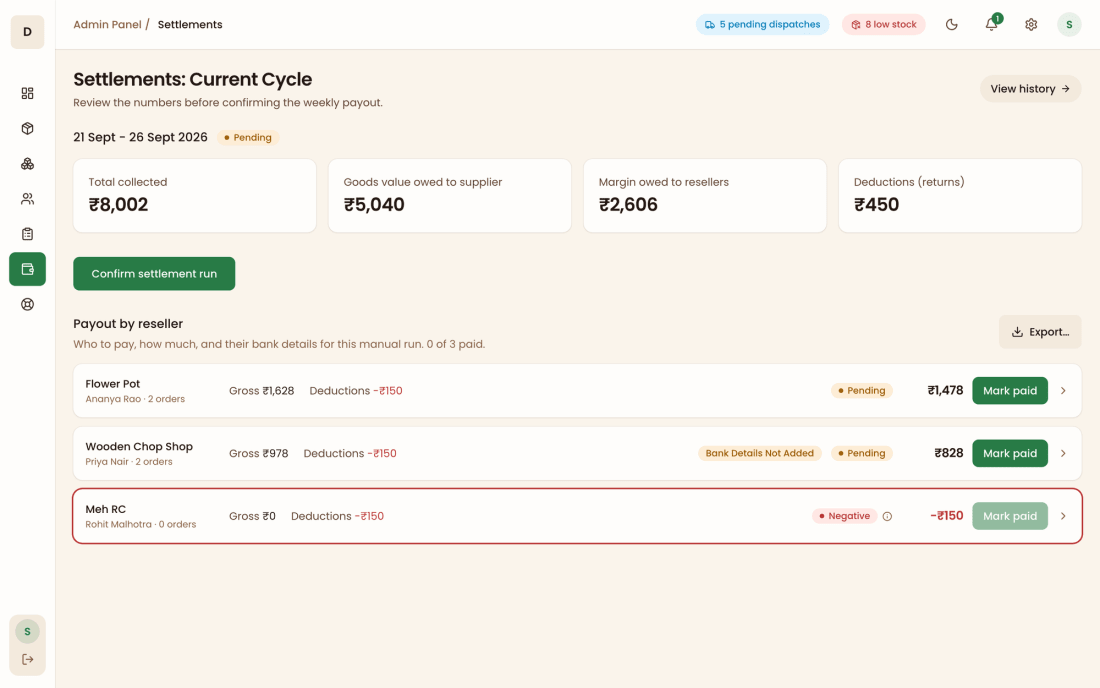
The seller's home screen said: Earnings this cycle ₹0. Next payout 22 Nov. Nothing due yet. One click away, the Earnings page said ₹1,478 was due on 22 Nov. Same seller, same payout date, two answers.
Neither screen was broken in the usual sense. Home was reading the week in progress. Earnings was reading the week that had closed and was waiting to be paid. Each was right about its own week. Neither said which week it meant.
A seller on this platform never touches stock. They pick products, set a price, and wait for the margin. If the first two screens disagree about that money, nothing else on the dashboard gets believed.
What I was given
The model was already set by the business. Sellers earn the margin between the supplier's price and their own. Weeks run Monday to Saturday and the supplier pays the Sunday after. The flows and the architecture came from management. My part, as lead designer, was everything a person reads and does on top of that.
It wasn't one screen
I audited the three journeys end to end, seller, shopper and supplier, against Nielsen's ten heuristics. The money problem kept coming back in different clothes.
The label I didn't add
The quick fix was a label. "This week" on one number, "last week" on the other. It would have explained the mismatch and left it standing. Each screen was still doing its own sum, so the next screen anyone added would disagree in a new way. I wanted screens that could not disagree, not screens that apologised for it.
One calculation, five screens
Every money figure now comes from one place. It works out each week from the calendar and the orders: this week so far, what is waiting to be paid and whether it is late, and every closed week. The seller's home, Earnings, the supplier's payout run, payout history and reports all read it.
The stored record got smaller on purpose. It holds only what a person decided: this seller was paid, this run was confirmed. Every amount is worked out fresh from the orders, so a summary is always the sum of its rows.
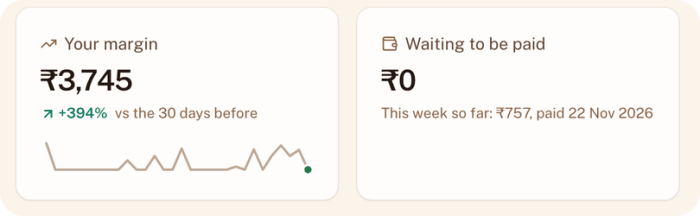

The before and after screens come from different points in the demo data, so the amounts differ. What matters is that Home and Earnings now show the same two numbers. The words changed with the numbers. Home now says "Waiting to be paid", with this week's running total under it. Earnings splits the same money three ways: this week so far, waiting to be paid, and paid to date. Statements show margin, deductions and the amount paid for every week.
A run you can't confirm by accident
The supplier's side was one button over a list. It is now a stepped run: review the week, pay each seller, then confirm. Confirm stays locked until everyone is paid. "Mark all paid" asks first. A seller with no bank details is flagged before the run, not in the middle of it.
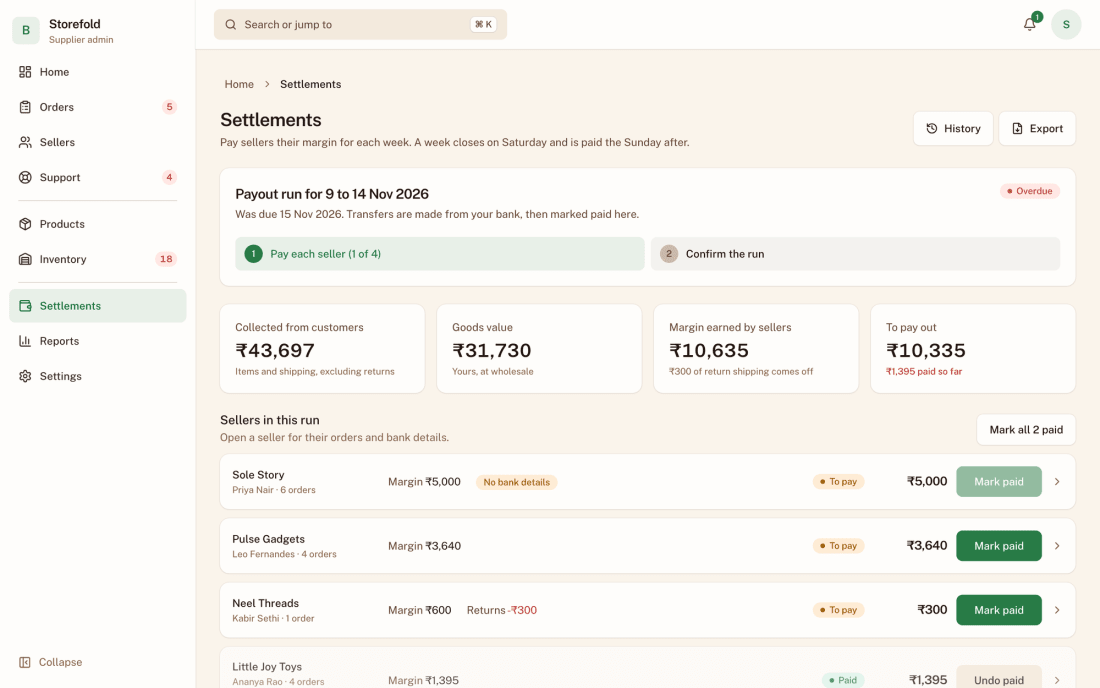
A late payout reads differently on each side. The seller sees it as processing, not missing. The supplier sees it as the most urgent item on their home screen.
One bug only appeared after midnight. Live orders were stamped in UTC while the week logic used local dates, so an order placed in India between midnight and 5:30am could land in the previous payout week. It surfaced in the audit I ran before testing, and every day and week count now goes through one local-time helper.
What I can and can't claim
This is a front-end MVP running on demo data, and the product is under NDA, so its name is changed in these screens. Testing so far has been inside the team, with us playing seller, shopper and supplier. There is no retention figure or support-ticket count here, and I'd rather say that than imply one.
What I can show is the before and after, and a data check that runs after a test session and reports whether settlements, reports, prices and stock still agree.
What I'd check
- Whether sellers read "Waiting to be paid" the way I meant it. The wording has only been tried on people who already know how the weekly cycle works.
- Whether a stepped run slows down a supplier paying forty sellers. It has only been run with four.