

The paperwork filter
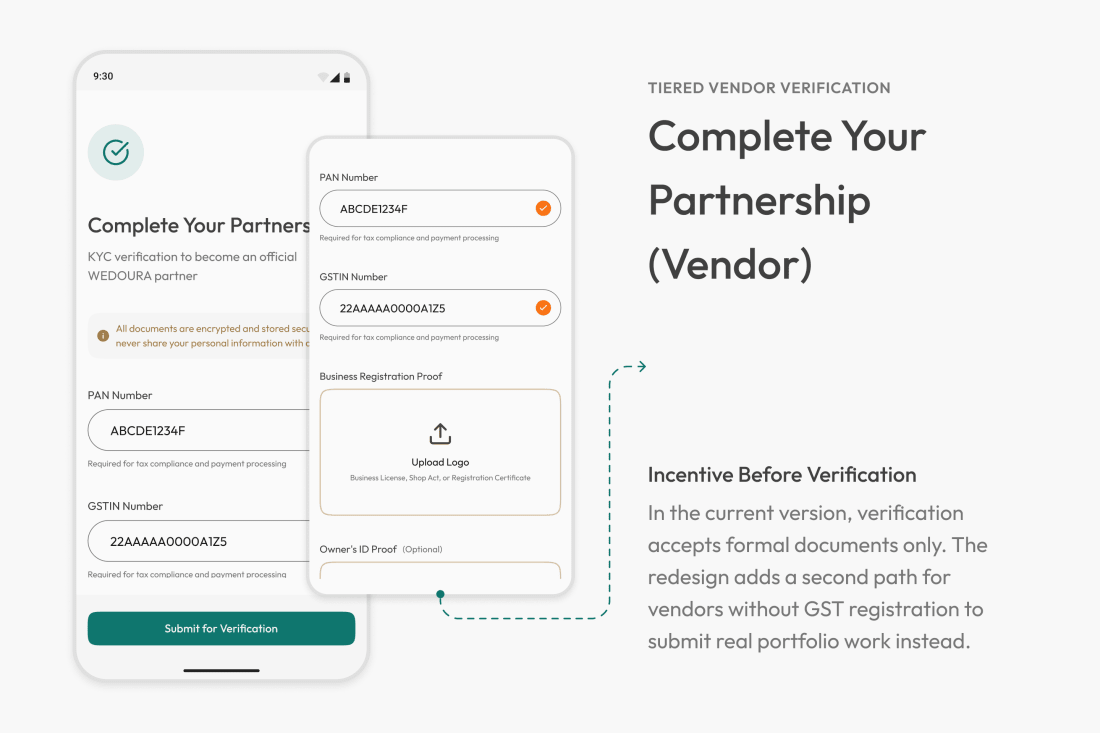
Wedoura's whole pitch to couples is vendor quality. That pitch only holds if the supply side is real. I didn't have a user base to interview or budget for primary research, so I ran a competitive teardown instead, signing up as a test user on established Indian wedding marketplaces and reading through public vendor complaints.
A pattern showed up fast. Vendors who listed a personal WhatsApp number alongside their profile responded reliably through it. The same vendors ignored enquiries sent through the platform's own messaging. They weren't ignoring buyers. They were filtering by channel, treating an in-platform enquiry as low-trust by default.
Underneath that was a bigger problem. A strict documents-only verification step would have blocked most of the market before any of it mattered. Photographers, decorators, and caterers with real clients but no GST registration make up a large share of vendors here. Block them, and the supply side is too thin to be worth a couple's trust in the first place.
Two verification paths
Documents-only was the obvious first version, and I rejected it. It rewards formality over actual legitimacy. The redesign adds a second path: vendors without GST registration submit a portfolio instead, real photos, links, past client work. Two roads to the same verified badge, one built on paperwork, one built on evidence that the work is real.
Approval, not a wall

The original flow blocked a vendor cold during the 24-48 hour review window. When someone hits a wait with no visible end, they leave without saying anything, and the platform loses a legitimate vendor without ever knowing why. So the review runs in the background now. A vendor keeps building their profile while it clears, instead of staring at a spinner.
Trust isn't one-time
Verifying someone once and calling it done was the easy option, and I turned it down. A report-to-admin-inquiry path sits underneath the whole system, so a vendor's status can be revisited if their real-world behavior stops matching what got them approved. Onboarding earns the badge. This is what keeps it honest afterward.
What shipped
Wedoura went live with this system in production, and the client began onboarding vendors under it within the engagement window.
I was solo and client-facing, with no role after handoff. When the engagement ended, so did my visibility into the product. I don't have a vendor drop-off number to show, because that data was never available to me. I'd rather say that plainly than imply a result I can't back up.
What I'd check
This is the other half of the same marketplace.
See the couple onboarding case study