3 min read
Sold twice
The platform is for small shops in India that sell at a counter and online at the same time. Its promise is one line: one stock count, however you sell. The failure it exists to prevent is just as short. A piece sells at the counter at noon and is still for sale on the website at one.
The first version asked for everything
The first product form handled this by asking. Every variant had an Online box and an Offline box. Three sizes in two colours meant twelve numbers before a product could be saved, and a note explained that totals set in another tab capped what could go into these ones.
It was accurate. It was also built for the shop with the most complicated stock, then handed to every shop. The people using this are owners and counter staff, often on a phone, often between customers. Most of them have one shelf and one number in their head: how many are left.
What I was given
The business model and the flows were set: one inventory behind the counter, the shop's own site, pickup and courier, with more branches on higher plans. My part, as lead designer, was how a shopkeeper meets that model on a screen.
Start with one number
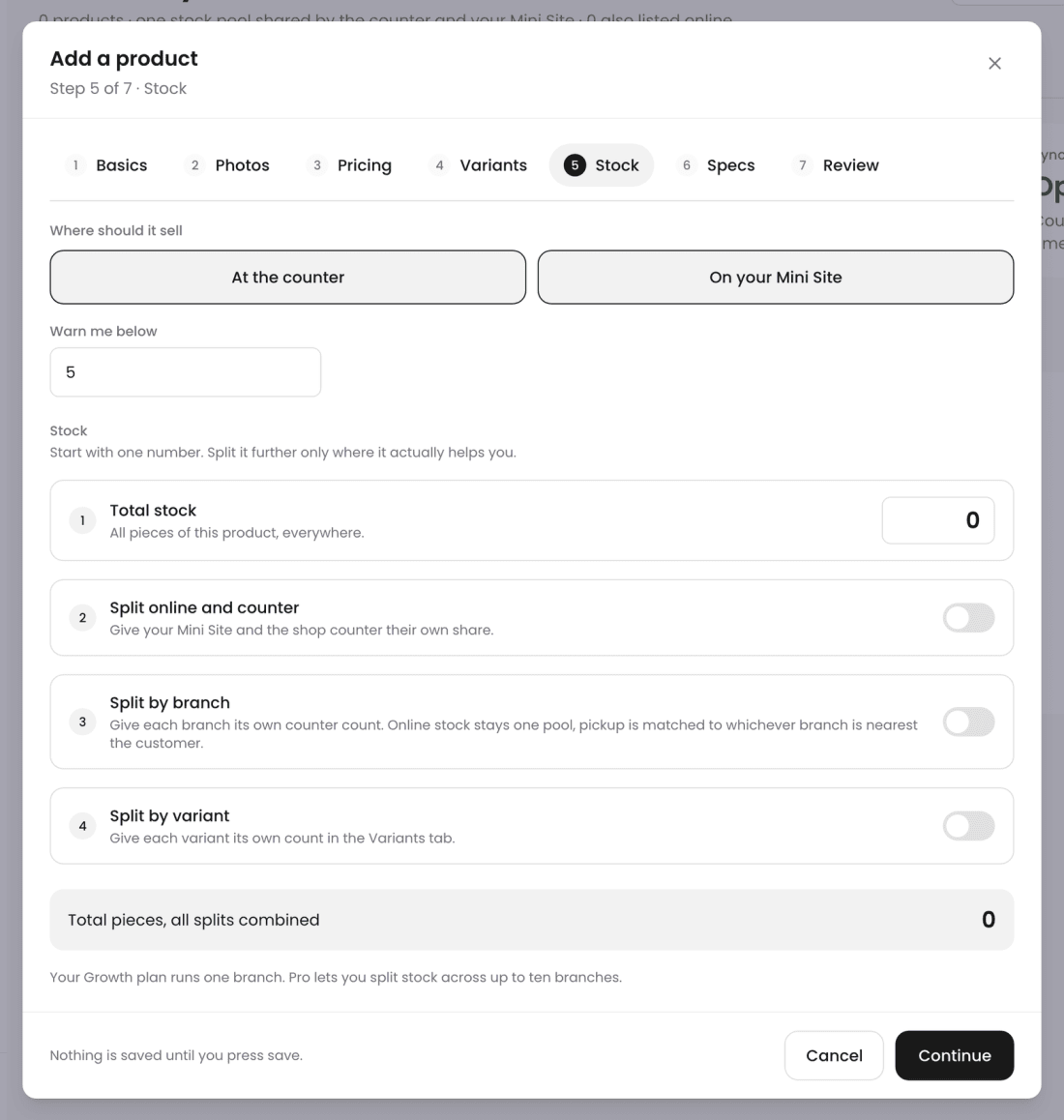
The stock step now opens with a single field: total stock, all pieces of this product, everywhere. Under the heading sits the sentence I'd defend over any other on the screen: "Start with one number. Split it further only where it actually helps you."
Below that are three switches, in the order a shop grows into them.
- Split online and counter. The shop's site and the counter each get their own share.
- Split by branch. Each branch gets its own counter count. Online stock stays one pool, and pickup is matched to the branch nearest the customer.
- Split by variant. Each size or colour gets its own count.
Each one is off until the shop turns it on. A shop that never touches them still gets the promise, because a single pool cannot be sold twice.
The total stops being a field
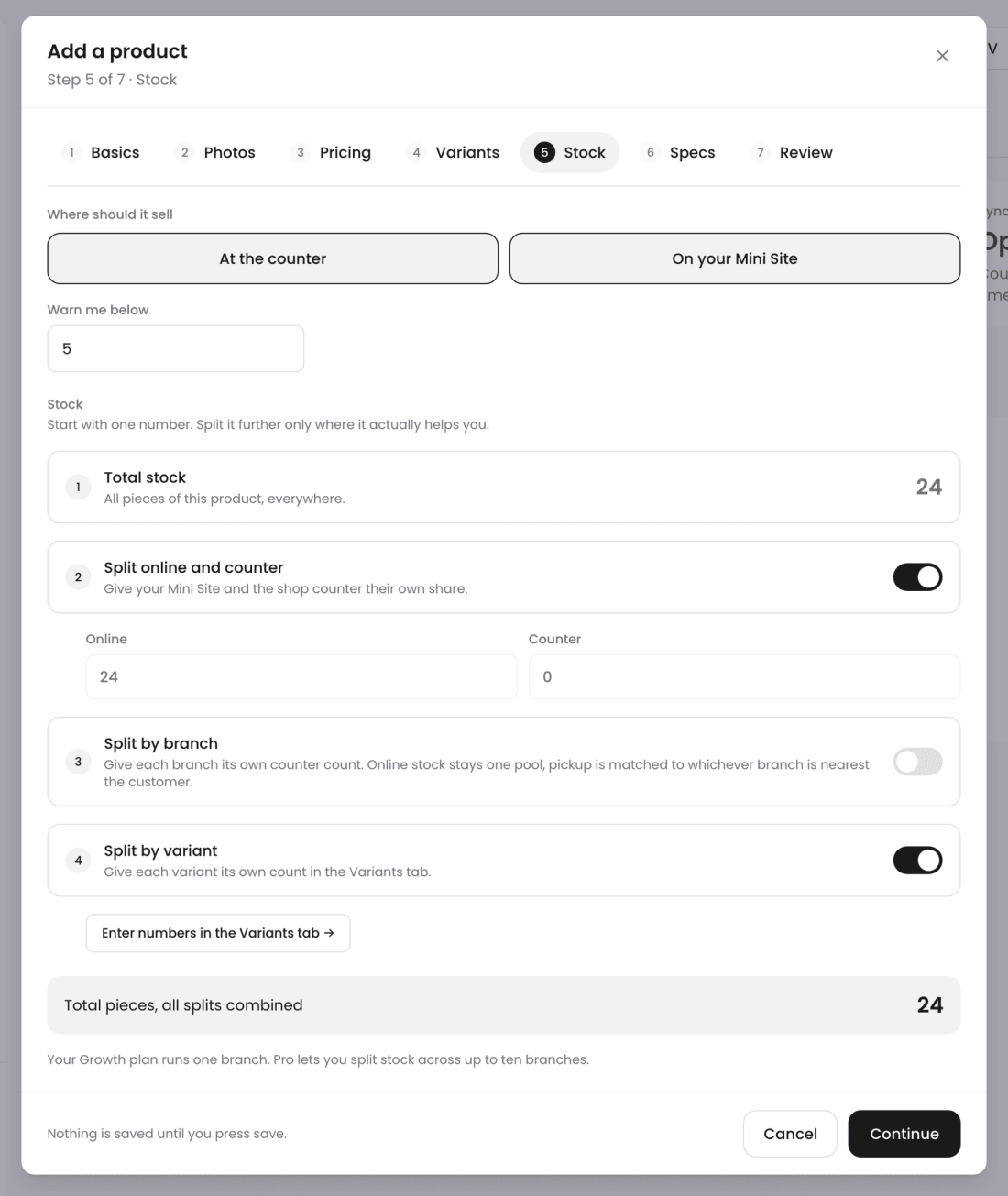
Turn on a split and the total changes from something you type into something the screen adds up. Online 24, counter 0, total 24. The line at the bottom, "Total pieces, all splits combined", is always the sum of what is above it, so it cannot disagree with the parts.
Splitting by branch belongs to a higher plan. The screen says so in one plain line under the total and leaves the switch visible, so a growing shop can see what comes next before it needs it.
The same idea everywhere else
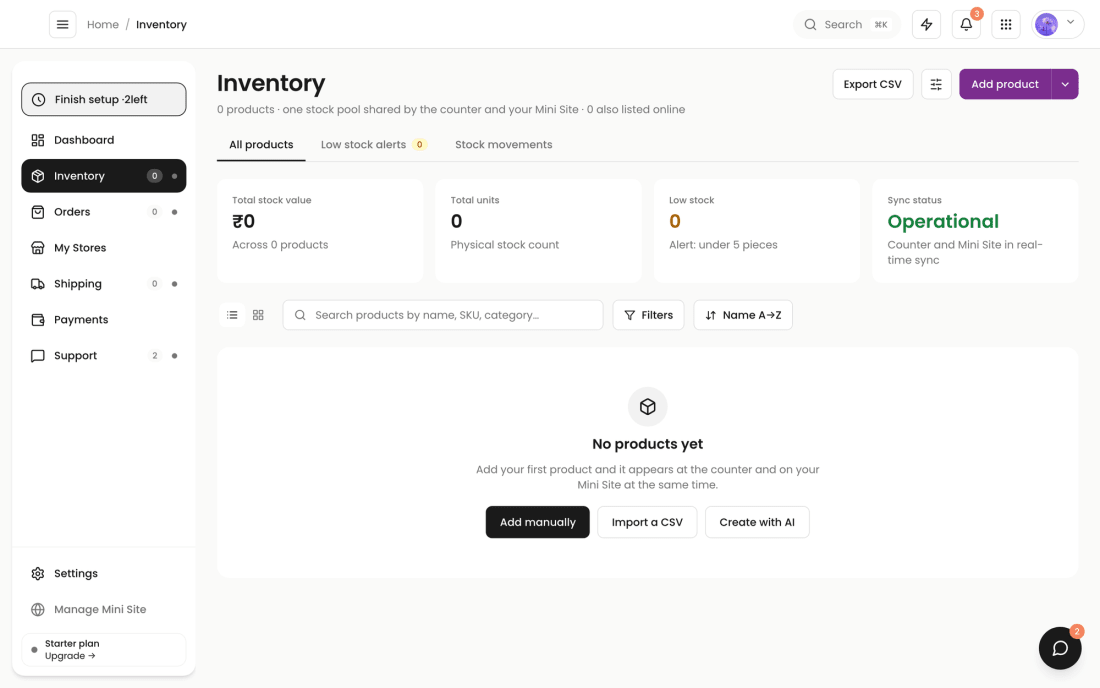
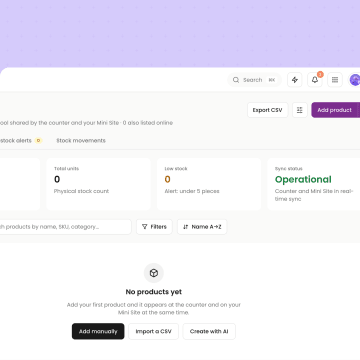
The rest of the app repeats the one-pool idea in plain words. The inventory header reads "one stock pool shared by the counter and your Mini Site". The empty state says a first product "appears at the counter and on your Mini Site at the same time". The dashboard breaks the pool into three numbers a shopkeeper already thinks in: on hand, held for orders, free to sell.
The first version was not wrong. Every number it asked for was real. It just asked the smallest shop the largest shop's questions.
What I can and can't claim
The product is under NDA, so its name and logo are removed from these screens. I have no usage numbers to show and no session with real shopkeepers to quote. What I can show is the screen before and after, and the reasoning.
What I'd check
- Whether shop owners understand "split" at all, or whether it needs a worked example the first time it appears.
- What happens when a shop turns a split on, enters numbers, then turns it off. The screen has to say where those numbers went.
- Whether the low stock warning should follow the split, so a counter running low is flagged even when the website has plenty.